Mismatched from the Start: Understanding Pool Cover and Bracket Compatibility Before You Buy
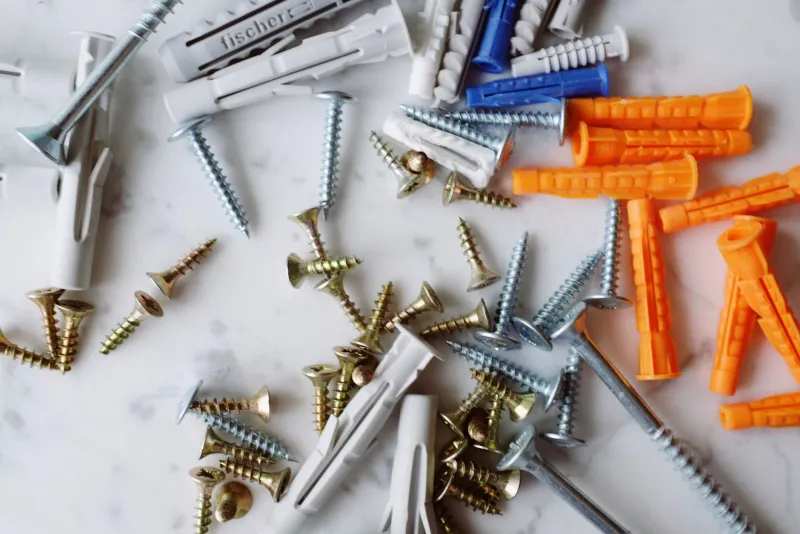
For many pool owners, the discovery comes at the worst possible moment: the new pool cover is spread across the deck, the old brackets are in hand, and nothing connects the way it should. Bolt patterns don't align. Anchor sockets sit at the wrong depth. The cover's webbing loops are spaced two inches off from where the hardware lands. What looked like a simple upgrade has become an expensive puzzle.
This scenario is more common than the industry tends to acknowledge. Pool covers and the bracket systems that secure them have evolved significantly over the past two decades, and the components are rarely as interchangeable as manufacturers' packaging implies. Understanding why incompatibility occurs—and how to prevent it—can save pool owners considerable time, money, and frustration.
Why Compatibility Is More Complicated Than It Appears
Pool cover brackets are not universal hardware. They are engineered to work within specific load tolerances, anchor configurations, and cover geometries. A bracket designed for a winter safety cover from one era may have been built to a standard that has since been revised or abandoned entirely. When a pool owner replaces only the cover without addressing the anchoring system, they are often pairing components from two different design generations.
The problem is compounded by the fact that there is no single, binding national standard governing the dimensional relationship between pool covers and their anchoring hardware in the United States. Industry organizations have published guidelines, and many manufacturers follow them closely, but variations persist across brands and product lines. A cover rated for the same pool dimensions as an existing bracket system may still be incompatible due to differences in strap placement, deck anchor spacing, or the diameter of the anchor socket itself.
The Three Most Common Sources of Incompatibility
1. Anchor Spacing and Deck Layout
Most inground pool covers rely on a grid of brass or stainless steel deck anchors installed at measured intervals around the pool perimeter. The straps or cables on the cover must align with those anchors precisely. When pool owners purchase a replacement cover from a different manufacturer, they frequently discover that the new cover's strap pattern assumes a slightly different anchor spacing—sometimes as little as two to four inches off, but enough to create dangerous tension asymmetries or leave portions of the cover unsecured.
Before purchasing a replacement cover, measure the existing anchor spacing carefully and compare it against the new cover's specification sheet. If the manufacturer does not publish strap spacing dimensions, request them directly. This single step eliminates a significant percentage of compatibility failures.
2. Anchor Socket Diameter and Depth
Deck anchors are not all the same diameter. Older installations commonly used anchors with a 3/4-inch socket, while many contemporary systems have shifted toward 1-inch or proprietary profiles. Bracket hardware—the springs, straps, and connectors that attach the cover to the anchors—must match the socket diameter of the installed anchors. Using undersized hardware in an oversized socket creates a loose, unreliable connection that can fail under wind load or the weight of standing water.
Depth is equally important. Some anchors sit flush with the deck surface; others are recessed. The key mechanism on the connecting hardware must be long enough to engage the anchor's locking groove fully. A partial engagement may hold under light conditions but release under stress.
3. Cover Material and Hardware Weight Ratings
Not all pool covers are created equal in terms of weight and structural load. A lightweight mesh safety cover places fundamentally different demands on its anchor system than a solid vinyl cover designed to bear the weight of accumulated rainwater or snow. When pool owners upgrade from a mesh to a solid cover—or vice versa—the existing brackets may not be rated for the new load profile.
This is particularly relevant for pool owners in northern states where winter snow accumulation is a design consideration. A bracket system adequate for a mesh cover in Georgia may be dangerously undersized for a solid cover in Minnesota. Always verify that the bracket system's load rating matches or exceeds the demands of the specific cover being installed.
How Industry Standards Have Shifted Over Time
The pool cover industry has undergone meaningful evolution since the widespread adoption of safety covers in the 1980s and 1990s. Early systems were often proprietary, with manufacturers designing covers and hardware as closed ecosystems. As the market matured and consumer demand for interchangeable components grew, many manufacturers moved toward more standardized anchor profiles—but the transition was gradual and uneven.
Pool owners with installations dating back fifteen or more years are especially likely to encounter compatibility challenges. Hardware from that era may pre-date current anchor diameter conventions, and replacement covers are increasingly designed around contemporary standards. In some cases, the most cost-effective solution is not to find a compatible cover for old hardware, but to replace the anchor system entirely as part of the cover upgrade.
A Pre-Purchase Compatibility Checklist
Before committing to any pool cover or bracket purchase, work through the following verification steps:
Measure existing anchor spacing. Document the distance between each anchor point around the full perimeter of the pool. Note any irregularities—not all installations are perfectly symmetrical.
Identify anchor socket diameter and type. Use a caliper or a known-diameter dowel to measure the socket opening. Note whether the anchors are flush-mount or recessed, and whether they use a twist-lock, spring-lock, or other engagement mechanism.
Confirm pool dimensions against cover specifications. Pool covers are sized to overlap the deck by a defined margin. Verify that the cover's listed dimensions account for your pool's actual shape, including any irregular features such as steps, ledges, or attached spas.
Match load ratings to cover type. Determine whether the cover you are purchasing is mesh or solid, and confirm that the bracket system is rated for the anticipated load, including regional snow and water accumulation.
Cross-reference manufacturer compatibility documentation. Many reputable manufacturers publish compatibility matrices or offer customer service lines specifically for this purpose. Use them.
Inspect existing hardware before reusing it. Even if dimensions appear to match, older brackets and springs may have degraded in ways that are not immediately visible. Corroded springs, worn anchor sockets, and fatigued straps should be replaced rather than reused.
When Replacement Is the Right Answer
There is a natural reluctance to replace hardware that appears to be in working order. However, the cost of an incompatible installation—a cover that shifts in a winter storm, a child who falls through an inadequately secured safety cover, or a deck anchor that fails under ice load—far exceeds the cost of new hardware. When the existing system is more than a decade old, or when a new cover cannot be confirmed as fully compatible, a complete system replacement is the more prudent investment.
Compatibility is not merely a convenience issue. It is a safety issue. Pool cover systems are designed to function as integrated units, and the decision to mix components from different eras or manufacturers should always be made with full knowledge of the dimensional and load-rating variables involved.
Taking the time to verify compatibility before purchasing is the simplest and most effective way to avoid the frustration of a mismatched installation—and the far more serious consequences that can follow.